
 Image 1 of 1
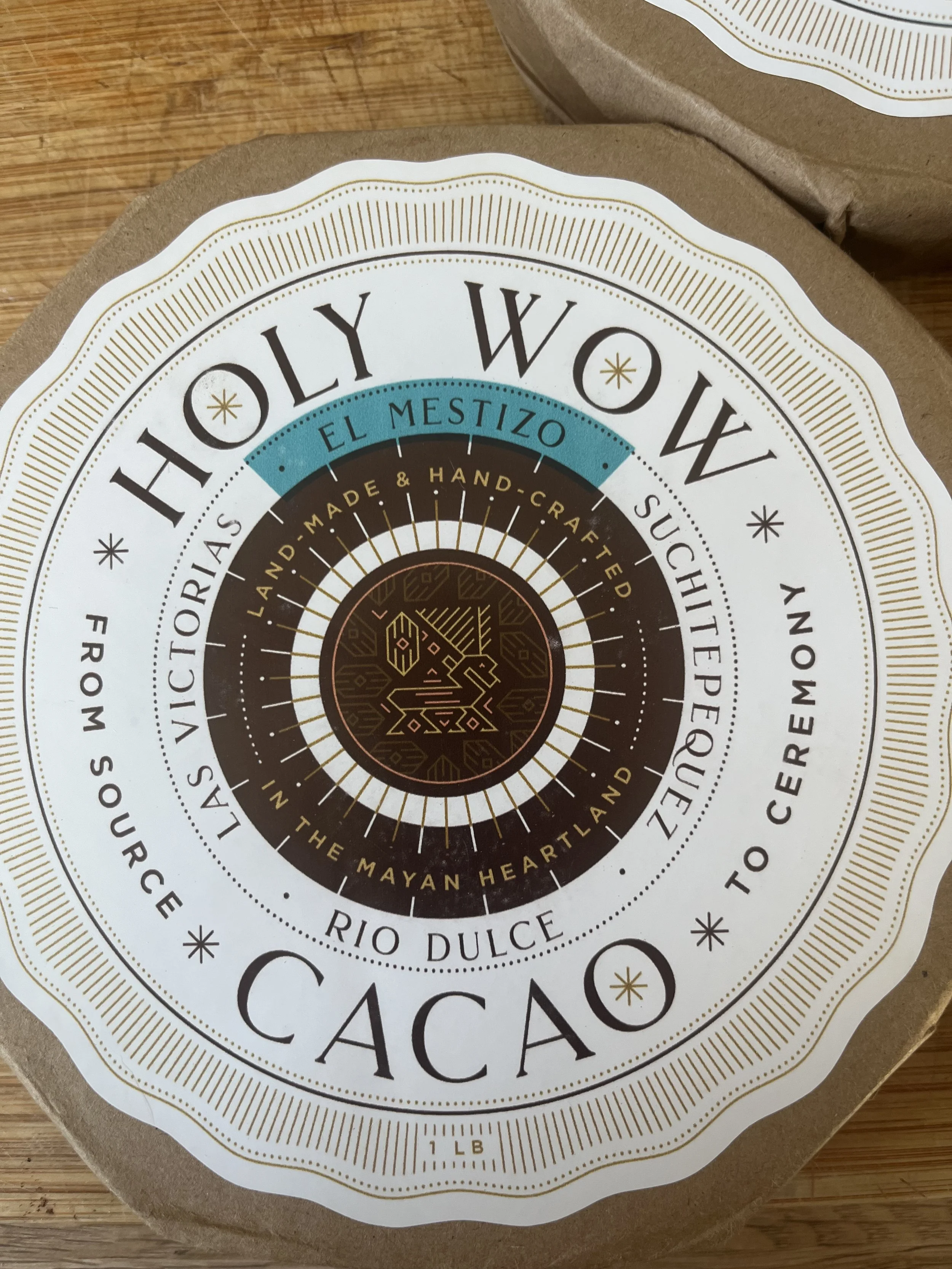
EL MESTIZO - HOLY WOW CACAO
WHAT'S INSIDE
100% pure cacao paste, pressed into a block. That's it.
No sugar. No dairy. No fillers. Nothing added, nothing removed — just the whole bean, exactly as the Tzunuñá women's collective prepared it.
What's in the block:
Cacao paste (Theobroma cacao) — 100%
Cacao butter — naturally present in the whole bean, not added
Theobromine — the gentle, heart-opening compound that makes ceremonial cacao what it is
Magnesium, iron, zinc, antioxidants — all naturally present in the whole bean
Origin flavor profiles:
3-Origin Blend — Full-bodied, harmonious. Rio Dulce, Las Victorias & Suchitepiquez together.
HOW TO PREPARE
Your dose. Your ceremony.
Dose guide:
Ceremonial dose — 1.5 oz (42g)
Daily heart-opening —20-25g / 1 oz (28g)
New to cacao? Start at 0.5 oz (14g) and feel it first.The method:
Grate or finely chop your cacao dose
Melt in 2–3 oz of hot water — around 160°F, not boiling
Add another 4–6 oz of warm water or plant milk
Whisk vigorously, or blend for 20 seconds until frothy
Add spice, sweetener, or nothing at all — cacao is complete on its own
Try it with: cayenne, cinnamon, vanilla. Or just water and intention.
Note: if you're on SSRIs, have a heart condition, or are pregnant, start with a small dose and consult your practitioner. Theobromine is gentle but it is active medicine.
WHERE IT COMES FROM
The village of Tzunuñá sits on the western shore of Lake Atitlán in Solólá, Guatemala — three volcanoes across the water, mist on the mountains most mornings.
This is where every block of Holy Wow Cacao begins.
The cacao grows on four family farms across Guatemala's most storied regions — Suchitepequez, Rio Dulce, Las Victorias, and Alta Verapaz. Different soil, different altitude, different climate. Different cacao.
After harvest, the beans arrive in Tzunuñá. The women of the local collective take over: fermenting, fire-roasting, hand-peeling, and pressing each batch into the blocks you hold.
5% of every sale goes back to the community — Water4Life, school sponsorships, Casa Tot Loy, and lakeshore clean-up projects.
When you buy a block, you're part of that.
WHY CEREMONIAL GRADE?
Ceremonial grade gets used loosely. Here's what it actually means.
Most cacao products strip the bean down. Cocoa powder has the fat pressed out. Chocolate bars add sugar, lecithin, stabilizers. Dutch-process cocoa destroys antioxidants with alkali treatment.
Ceremonial-grade cacao keeps the whole bean intact — full fat, minimal heat, nothing added. The theobromine stays active. The cacao butter stays in. The minerals, essential oils, and subtle flavor compounds stay present.
Holy Wow Cacao goes further:
Fire-roasted over open flame in small batches — not industrial drum-roasted
Hand-peeled by the women's collective in Tzunuñá — not machine-hulled
Stone-ground into paste — not chemically extracted
Pressed into block — not spray-dried into powder
The result is a food that's also medicine — the same preparation used in Mayan traditions for thousands of years, made by the same communities in the same highlands.
That's what we mean when we say ceremonial grade.
WHAT'S INSIDE
100% pure cacao paste, pressed into a block. That's it.
No sugar. No dairy. No fillers. Nothing added, nothing removed — just the whole bean, exactly as the Tzunuñá women's collective prepared it.
What's in the block:
Cacao paste (Theobroma cacao) — 100%
Cacao butter — naturally present in the whole bean, not added
Theobromine — the gentle, heart-opening compound that makes ceremonial cacao what it is
Magnesium, iron, zinc, antioxidants — all naturally present in the whole bean
Origin flavor profiles:
3-Origin Blend — Full-bodied, harmonious. Rio Dulce, Las Victorias & Suchitepiquez together.
HOW TO PREPARE
Your dose. Your ceremony.
Dose guide:
Ceremonial dose — 1.5 oz (42g)
Daily heart-opening —20-25g / 1 oz (28g)
New to cacao? Start at 0.5 oz (14g) and feel it first.The method:
Grate or finely chop your cacao dose
Melt in 2–3 oz of hot water — around 160°F, not boiling
Add another 4–6 oz of warm water or plant milk
Whisk vigorously, or blend for 20 seconds until frothy
Add spice, sweetener, or nothing at all — cacao is complete on its own
Try it with: cayenne, cinnamon, vanilla. Or just water and intention.
Note: if you're on SSRIs, have a heart condition, or are pregnant, start with a small dose and consult your practitioner. Theobromine is gentle but it is active medicine.
WHERE IT COMES FROM
The village of Tzunuñá sits on the western shore of Lake Atitlán in Solólá, Guatemala — three volcanoes across the water, mist on the mountains most mornings.
This is where every block of Holy Wow Cacao begins.
The cacao grows on four family farms across Guatemala's most storied regions — Suchitepequez, Rio Dulce, Las Victorias, and Alta Verapaz. Different soil, different altitude, different climate. Different cacao.
After harvest, the beans arrive in Tzunuñá. The women of the local collective take over: fermenting, fire-roasting, hand-peeling, and pressing each batch into the blocks you hold.
5% of every sale goes back to the community — Water4Life, school sponsorships, Casa Tot Loy, and lakeshore clean-up projects.
When you buy a block, you're part of that.
WHY CEREMONIAL GRADE?
Ceremonial grade gets used loosely. Here's what it actually means.
Most cacao products strip the bean down. Cocoa powder has the fat pressed out. Chocolate bars add sugar, lecithin, stabilizers. Dutch-process cocoa destroys antioxidants with alkali treatment.
Ceremonial-grade cacao keeps the whole bean intact — full fat, minimal heat, nothing added. The theobromine stays active. The cacao butter stays in. The minerals, essential oils, and subtle flavor compounds stay present.
Holy Wow Cacao goes further:
Fire-roasted over open flame in small batches — not industrial drum-roasted
Hand-peeled by the women's collective in Tzunuñá — not machine-hulled
Stone-ground into paste — not chemically extracted
Pressed into block — not spray-dried into powder
The result is a food that's also medicine — the same preparation used in Mayan traditions for thousands of years, made by the same communities in the same highlands.
That's what we mean when we say ceremonial grade.